
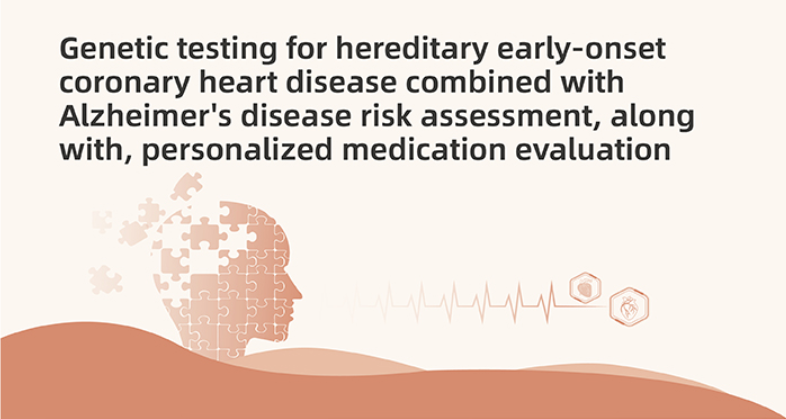
Core Product Advantages
- Sensitive and Accurate Detection
Adopts high-precision gene sequencing technology to accurately detect disease-associated and drug-related genes, with high detection sensitivity and accuracy, ensuring the reliability of test results for clinical risk assessment and medication guidance.
- Authoritative and Efficient Analysis
Based on authoritative genetic research evidence and standardized detection procedures, the product completes the whole testing process with high efficiency and delivers professional, standardized test reports to support scientific clinical decision-making.
- Convenient and Flexible Application
Features a streamlined experimental operation and standardized sample detection process, with flexible and convenient application scenarios. It is suitable for large-scale clinical screening, personalized health assessment and high-risk population stratification, meeting the diversified testing needs of medical institutions and individuals.
Key Detection Content
- Hereditary Early-Onset Coronary Heart Disease Risk Genes
Accurately detects core pathogenic risk genes including LDLR, LDLRAP1, PCSK9, ABCG5, ABCG8 and APOB, realizing early screening and risk warning of hereditary early-onset coronary heart disease.
- Statin-Related Medication Evaluation Genes
Specialized analysis of statin drug-associated genes to comprehensively evaluate the adverse reaction risk and therapeutic effectiveness of statin drugs for individuals, providing a genetic basis for clinical personalized medication selection and dosage adjustment.
- Alzheimer’s Disease (AD) Risk Genes
Conducts targeted genetic testing for Alzheimer’s disease risk, effectively predicting the risk of familial AD, identifying high-risk individuals, and laying a foundation for early disease prevention and timely clinical intervention.
Applicable Population
- People with early-onset coronary heart disease and other cardiovascular diseases, and those with a family history of early-onset coronary heart disease or imaging evidence of atherosclerosis
- People with hypertension, hyperglycemia and hyperlipidemia (adult serum LDL-C ≥ 4.1 mmol/L), and first-degree relatives of such populations
- People with hypercholesterolemia and sitosterolemia, and those concerned about cardiovascular health
- People with cognitive impairment who need risk stratification, and those suspected of having Alzheimer’s disease and related cognitive impairment disorders
- High-risk groups with a family history of Alzheimer’s disease, and people concerned about neurocognitive diseases and brain health
Clinical Significance
- Dual Disease Genetic Risk Indication
Accurately identifies the individual genetic susceptibility to hereditary early-onset coronary heart disease and familial Alzheimer’s disease, provides clear genetic risk prompts for high-risk groups, and realizes early intervention and prevention of the two major diseases.
- Statin Personalized Medication Guidance
Evaluates the individual response to statin drugs from the genetic level, guides clinicians to formulate personalized medication plans, improves the therapeutic effect of lipid-lowering drugs and reduces the risk of adverse drug reactions.
- Comprehensive Health Screening & Risk Stratification
Serves as an important means of cardiovascular and neurocognitive health screening, helps asymptomatic people find potential genetic risks in time, and completes risk stratification for cognitive impairment and suspected AD populations.
- Scientific Clinical Risk Assessment
Provides a comprehensive genetic basis for the cardiovascular and neurocognitive risk assessment of the tested population, and helps medical institutions formulate targeted health management, disease prevention and clinical intervention plans.
Standard Detection Process
- DNA extraction
- Sample quality control
- Library preparation
- Library quality control
- Loading and gene sequencing
- Professional bioinformatics data analysis
- Expert report review
- Formal test report release
Rapid Lead Time
The whole detection process is highly efficient and streamlined, with the professional comprehensive test report completed and released within 7 working days after receiving qualified samples, ensuring the timeliness of clinical diagnosis, risk assessment and health management decision-making.
 English
  Chinese
Reviews
There are no reviews yet.